

Pixel Perfect - Issue #4
Kojima juggles platforms, Saudi Arabia buys EA, and Microsoft continues to redefine exclusivity

Issue #4 • September 30, 2025
Welcome back to Pixel Perfect, where we decode the strategic decisions shaping gaming’s future. This week: Kojima Productions balances three massive projects across competing platforms, Microsoft continues to redefine what “exclusive” means, and a $55 billion acquisition puts Saudi Arabia at the center of mainstream gaming.
👑 THIS WEEK'S HEADLINERS
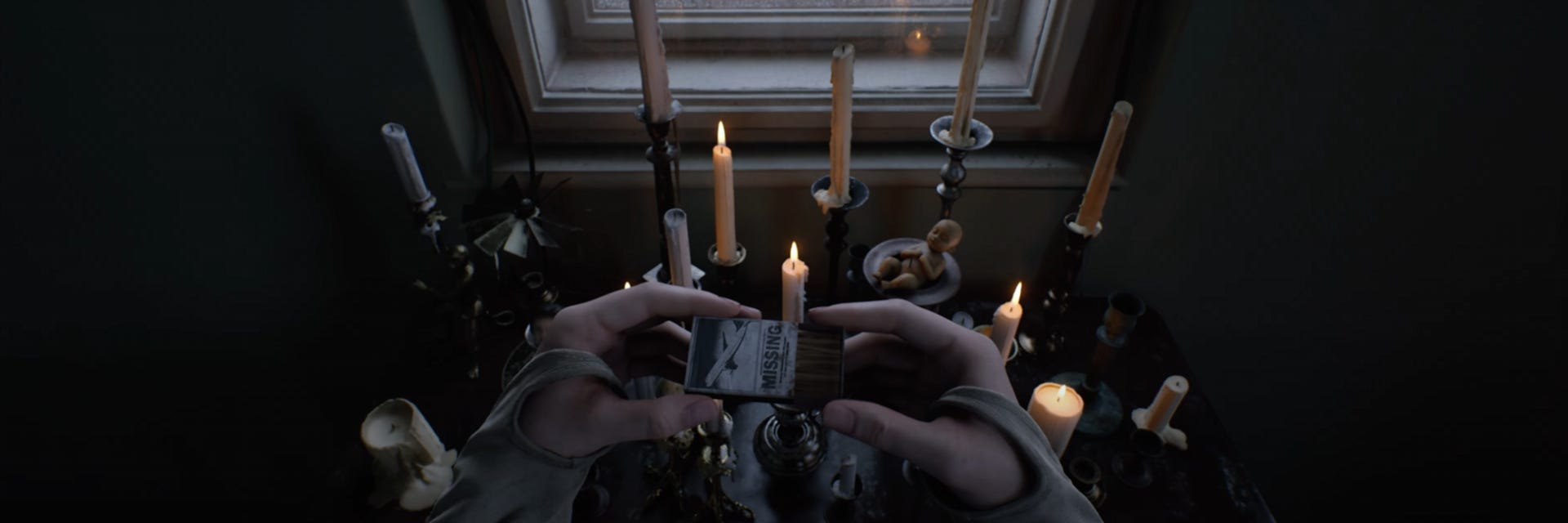
Kojima Productions Reveals Ambitious Three-Project Pipeline Across Competing Platforms
Hideo Kojima showcased OD: Knock for Xbox, revealed the first Physint artwork for PlayStation, and announced an AR project with Niantic during his studio’s 10th anniversary event in Tokyo. The reveal highlights how platform holders are willing to fund Kojima’s creative ambitions even when it means waiting their turn.
Phil Spencer appeared at the event to emphasize Microsoft’s commitment to OD, calling it “bold, unique, and unmistakably from this studio” while discussing the technical collaboration on Unreal Engine 5. PlayStation Studios head Hermen Hulst delivered a pre-recorded message reinforcing Sony’s support for Physint, referencing “the same creative energy” that’s defined their 30-year partnership. Both platform holders are essentially funding Kojima to take risks they won’t greenlight from their own internal studios.
Kojima acknowledged the sequencing reality - Physint remains in early pre-production until OD ships, with a five-to-six year development timeline once it ramps up. His casting philosophy (”working with people I like helps me live longer”) reflects a creative approach that prioritizes artistic vision over production efficiency. In an industry increasingly dominated by safe sequels and established IP, Kojima’s ability to secure platform funding for experimental projects like OD’s “totally new infrastructure” represents the rare exception to risk-averse publishing trends. The question isn’t whether he can manage three projects - it’s whether the platforms are patient enough to wait for his creative process to deliver.
EA’s $55 Billion Saudi Acquisition Marks Gaming’s Uncomfortable New Reality
Electronic Arts accepted a $55 billion takeover from a consortium led by Saudi Arabia’s Public Investment Fund, bringing FIFA, Madden, Battlefield, and The Sims under sovereign wealth fund ownership. CEO Andrew Wilson stays in place. The Redwood City headquarters remains. Everything continues exactly as before, except now the checks clear through Riyadh.
This isn’t gaming’s first Saudi investment—PIF has pumped billions into Embracer, Nintendo, Capcom, and Nexon—but it’s the first time the fund has taken complete control of a major Western publisher. The $210-per-share price represents a 25% premium, which shareholders will happily accept while conveniently ignoring that their buyer is a government intelligence-assessed to have ordered journalist Jamal Khashoggi’s murder.
Silver Lake and Jared Kushner’s Affinity Partners joined the consortium, lending the deal a veneer of conventional private equity credibility. But make no mistake about the power structure: PIF provides the capital, and Saudi Arabia’s Vision 2030 economic strategy now includes owning your sports games and military shooters. The transaction closes in June 2026, leaving players roughly nine months to reconcile their hobby with a government that criminalizes LGBTQ+ existence while sportswashing through gaming acquisitions.
PlayStation and Xbox Showcases Reveal First Quarter 2026 Is Absurdly Packed
Sony’s State of Play and Microsoft’s Tokyo Game Show broadcast dropped release dates for over a dozen major titles, and the pattern is clear: publishers are cramming everything into the first four months of 2026. Housemarque’s Saros launches March 20, Nioh 3 arrives February 6, Forza Horizon 6 targets somewhere in 2026, and Resident Evil Requiem hits all platforms—including Switch 2—on February 27.
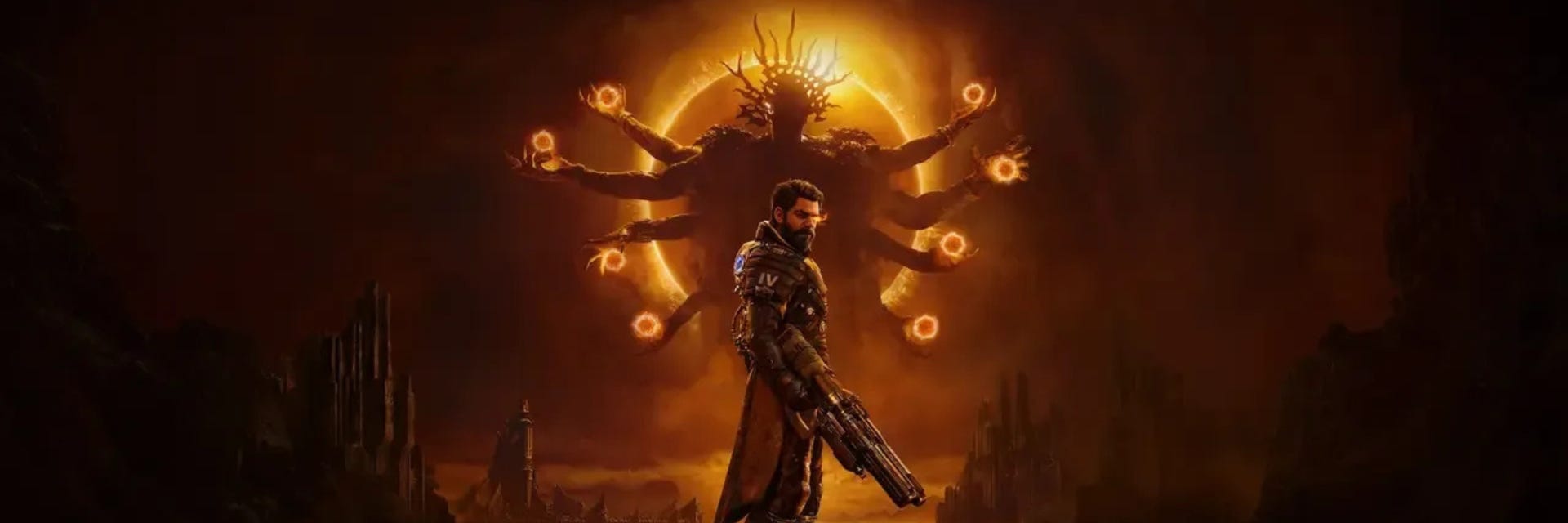
The PlayStation showcase leaned heavily into remasters and sequels. Deus Ex gets the Aspyr treatment for its 25th anniversary (February 5, 2026), Dynasty Warriors 3 returns rebuilt in Unreal Engine 5 (March 19, 2026), and ZA/UM’s espionage RPG Zero Parades: For Dead Spies arrives next year. The surprise announcement? Microsoft Flight Simulator 2024 coming to PS5 on December 8, 2025—Microsoft’s multiplatform strategy in action.
Xbox’s Tokyo presentation doubled down on Japan, officially confirming Forza Horizon 6’s Japanese setting alongside its staggered release strategy: Xbox and PC in 2026, PlayStation 5 “post-launch.” Capcom revealed the entire Monster Hunter Stories trilogy is coming to Xbox, with Stories 3: Twisted Reflection launching March 13, 2026. Ninja Gaiden 4 got a deep dive into its difficulty systems and accessibility options ahead of its October 21 launch, while Square Enix surprise-dropped Romancing Saga 2: Revenge of the Seven same-day on Xbox platforms.
Both showcases reinforced what Newzoo’s data already proved: the industry refuses to spread releases across the calendar, instead clustering everything into windows that guarantee some titles will get lost in the noise. The first quarter of 2026 now features at least eight major releases within ten weeks, ensuring players will be choosing between games rather than buying them all.
🎮 NEW & NOTEWORTHY RELEASES
OUT TODAY:
Lego Party (PS5, PS4, Xbox Series X|S, Xbox One, Switch, PC) - September 30 - Family-friendly party game featuring Lego-themed minigames and customization
Final Fantasy Tactics: The Ivalice Chronicles (PS5, PS4, Xbox Series X|S, Switch 2, Switch, PC) - September 30 - Square Enix’s tactical RPG classic returns with enhanced visuals and quality-of-life improvements
Nicktoons & The Dice Of Destiny (PS5, Xbox Series X|S, Switch, PC) - September 30 - Cartoon crossover board game adventure featuring Nickelodeon characters
COMING SOON:
Ghost of Yotei (PS5) - October 2 - Sucker Punch’s highly anticipated follow-up to Ghost of Tsushima with a new protagonist and setting
Super Mario Galaxy + Super Mario Galaxy 2 (Switch) - October 2 - Nintendo brings both Wii classics to Switch with enhanced controls
Digimon Story: Time Stranger (PS5, Xbox Series X|S, PC) - October 3 - Latest entry in the turn-based RPG series exploring time-travel mechanics
King of Meat (PS5, Xbox Series X|S, PC) - October 7 - Co-op dungeon crawler with roguelike elements and over-the-top combat
Battlefield 6 (PS5, Xbox, PC) - October 10 - EA’s military shooter returns with renewed single-player campaign focus
💬 INDUSTRY PULSE
Game Pass proves its value proposition—Ampere Analytics data shows Xbox users play 5.7 different games monthly versus 3.7 on PlayStation, with the “perceived value” of subscriptions driving discovery even when competitors offer larger libraries.
GDC rebrands as “Festival of Gaming” while cutting costs—Organizers admitted developers can’t afford attendance, introducing a cheaper “Festival Pass” for March 2026 while blaming “tighter budgets” and “fractured attention” for the rebrand.
Brazil bans loot boxes for minors—President Lula signed legislation prohibiting randomized monetization in games accessible to players under 18, effective March 2026, making Brazil the second country after Belgium to restrict the practice.
🎯 THIS WEEK'S REVIEW ROUNDUPS
Ghost of Yotei - 97% Critics Recommend (PLAY IT). Sucker Punch delivers what many are calling the best PlayStation exclusive of 2025, expanding on Ghost of Tsushima’s formula with a new protagonist and refined combat systems.
Hades II - 95% Critics Recommend (PLAY IT). Supergiant’s roguelike sequel proves lightning can strike twice, with deeper progression systems and expanded mythology that justify the full-price 1.0 launch on PC.
Baby Steps - 55% Critics Recommend (SKIP IT). The minimalist puzzle platformer’s momentum-based mechanics show promise but frustrating controls and lack of content make it hard to recommend on PlayStation and PC.
🔍 DEEP DIVE: The Release Window Crisis Is Getting Worse, And Publishers Still Won’t Learn
Newzoo’s latest market analysis reveals a self-inflicted industry wound: 45% of all AAA single-player games since 2021 launched in the same four-month window between mid-August and mid-November. Another 23% crammed into February and March. Combined, these five months account for 68% of major releases, creating a cannibalistic competition that drives up marketing costs while reducing visibility for everyone.
This isn’t new information. Publishers have known for years that holiday clustering increases player selectivity, forces discount-waiting behavior, and fragments attention across too many simultaneous releases. Yet they keep doing it because quarterly earnings reports and fiscal year targets matter more than long-term franchise health.
Senior market analyst Michael Wagner identifies the core problem: “Publishers’ reliance on traditional release windows and fiscal year reporting cycles risks reducing profitability by driving up marketing costs and limiting visibility.” Players’ budgets are shrinking, forcing them to choose one or two full-price games per season while everything else waits for sales. The effect is “especially pronounced” on PC, where Steam’s constant discounting has trained audiences to be patient.
But here’s what makes this particularly frustrating: the data proves alternative windows work. Games launching in the “weak” second quarter (April-June) generated equal or better engagement per title than the overcrowded fall season. Elden Ring (February 2022), Hogwarts Legacy (February 2023), and Baldur’s Gate 3 (August 2023) all became massive hits, in part, by launching when they faced less competition. July remains the industry’s weakest month despite being completely uncrowded, suggesting enormous opportunity for games willing to break from convention.
The competitive landscape is about to get worse. Grand Theft Auto 6’s delay to May 2026 might encourage publishers to pack the second half of 2025, creating what Wagner calls a “cannibalistic” environment “particularly for mid-tier titles.” Throw in major multiplayer releases like Battlefield 6 (October 2025) and Call of Duty: Black Ops 7 (November 2025), and you have a recipe for commercial disasters.
The fragmented media environment compounds the problem. Only 24% of players get news from gaming publications, while 32% rely on creators and influencers. Competing for limited influencer availability during peak windows drives up marketing costs exponentially, forcing publishers to spend more while achieving less reach.
Wagner’s conclusion should be obvious but apparently isn’t: “Most release dates are self-imposed, and launching during these peak periods strongly correlates with weaker performance.” The industry has “matured beyond being centered on Christmas gifts for children,” yet publishers still structure their entire calendar around holiday shopping patterns.
What this means for players: Expect continued price volatility and aggressive discounting as publishers panic about missing sales targets in overcrowded windows. The “wait for a sale” strategy becomes increasingly rational when major releases arrive in clusters with predictable price drops within weeks. Mid-tier games will struggle most, caught between blockbuster launches and patient audiences who’ve learned that $70 purchases rarely maintain value beyond launch month. The publishers who break from this pattern and launch confidently in uncrowded windows will likely find more engaged, less price-sensitive audiences—but institutional momentum suggests most won’t take that risk until quarterly losses force their hand.
🧠 THIS WEEK'S QUIZ
Poll open for one week. Answer revealed in Issue #5!
Last Week's Answer: Option A (Steam) - Valve’s platform launched in 2003 primarily to distribute updates and patches for Counter-Strike and other Valve games before evolving into the dominant PC digital storefront.
🎮 GAMING WISDOM
“When we got the Switch 2 hardware, we were surprised in a good way about how smooth the process was for us to bring the existing development version of the game to that platform.” — Masato Kumazawa, Producer, on bringing Resident Evil Requiem to Switch 2 alongside RE7 and Village simultaneously
💡 ONE MORE THING
Microsoft’s Tokyo Game Show presentation revealed how seriously they’re taking Japan after decades of indifference. Forza Horizon 6’s Japanese setting represents the franchise’s most-requested location since inception, but Xbox previously prioritized Western markets over fan demands. Now they’re building entire showcases around Tokyo, securing Monster Hunter and Ninja Gaiden partnerships, and funding Fatal Frame remakes. The shift isn’t subtle—it’s a complete reversal of the Xbox 360 era’s approach that treated Japan as a lost cause after early stumbles.
Phil Spencer’s appearance alongside Kojima and the emphasis on Game Pass accessibility for Japanese developers suggests Microsoft finally understands what PlayStation has always known: Japan’s development talent and creative influence remain essential to global platform competitiveness. Whether this renewed commitment translates to actual market share gains in Japan remains uncertain, but the strategic repositioning is undeniable.
I’ll be attempting to balance Borderlands 4 sessions with the Ghost of Yotei launch on October 2nd—Randy Pitchford’s advice to “play a different game” is finally sounding reasonable.
In the meantime, stay pixel perfect,
Josh Lurie
Editor, Pixel Perfect
PIXEL PERFECT | Sharply focused gaming intelligence
📧 Subscribe | 🧵 Follow on Threads | 🌐 Vertical Slice Games
Reply to this email with feedback or suggestions